

My surname is Zhao. I am seventy-five, and I have spent my life as a farmer. Life was hard when I was young. Things are better now, and the pension I receive makes a difference. At this stage of life, happiness does not have to be complicated. To me, it means enjoying my later years and living peacefully.
I would like to visit Taiwan and see it for myself. As for the dreams I had when I was young, they were never especially grand. I wanted to have a decent life. Looking at my life now, I feel that, in many ways, that wish has come true.

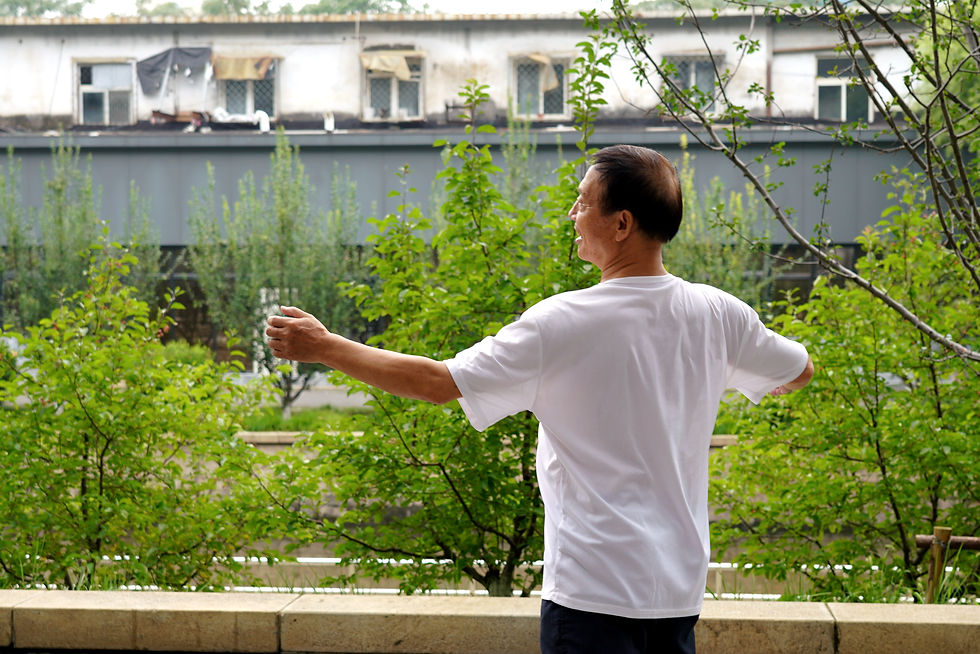

My surname is Yu. I am seventy-four and retired. If there is one thing I would like young people to understand, it is the importance of keeping an open mind and learning to let things go. Life is not always fair. If you hold on to every injustice and disappointment, it becomes difficult to move forward.
I have encountered many things, including deception, loss, and matters of life and death. Those experiences taught me that the outcome can be different when you stop carrying everything with you. What has happened has happened. Allow yourself to put it down and look ahead. That is the lesson I return to most often.
Whatever you do, even if it seems like a small thing, try to do it as well as you can. If you become good at your work, the rewards can be different. Ideally, choose something you enjoy that can also support you. But in any profession, doing the work well matters. Build your ability, give the task your best, and let that become the foundation for what comes next.


I am sixty-two and originally from Sichuan. I have been in Beijing for more than ten years, helping my daughter and looking after the children. My daughter is the reason I stay here. In my heart, I still feel that home is best. I miss Sichuan.
At the same time, I have met kind people here. The older people I spend time with are cheerful, and we get along well. After so many years, those everyday friendships mean something to me.
My days are quite simple. In the morning I go out to dance, then I cook and look after the children. In the evening I may go out again to exercise. Keeping my body healthy matters. I would say I am quite happy. I can miss my hometown and still find good things in the life I have here.

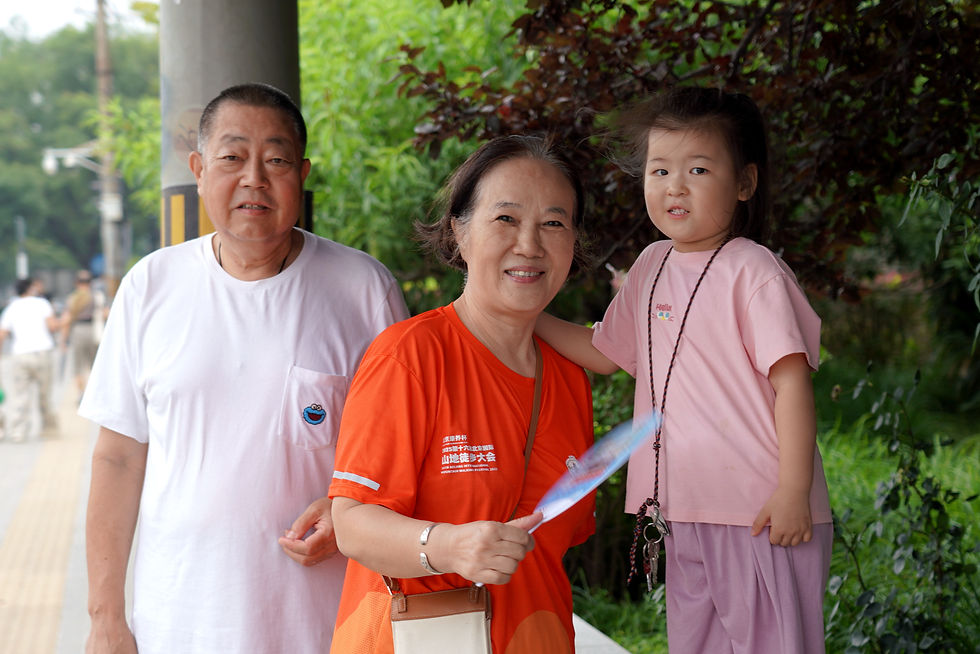
We met through an introduction, and we have lived together harmoniously over the years. Now that we are older and retired, we each have things we enjoy. My husband takes part in dragon dancing, and I enjoy recitation. We also have the pleasure of spending time with the younger generation of our family.
I have watched this child grow from the time they were born. That is part of the happiness of getting older: seeing a family grow around you and still having interests of your own. We have had a good life together. For us, there is happiness in that ordinary companionship and in the family time we share.


I am retired now. I am originally from Chongqing, and I joined the army in 1978. Military service brought me to Beijing, and I stayed here after transferring to civilian work. Back then, a conscript's allowance was very small. You did not enlist expecting to make money. It was a duty.
People sometimes talk as though soldiers are not afraid of war. Of course people are afraid. But a soldier has orders and a responsibility to defend the country. If I refuse to go, and you refuse to go, who is left? From the day you join, you understand that your youth, and potentially your life, are being placed in the service of that responsibility.
When there is a disaster, a rescue, or a war, it is often soldiers who go forward. I think our long history and traditions are part of why that sense of duty matters. I also think of countries with few resources that remain determined to defend themselves. If a country cannot protect itself, ordinary families lose their protection too. Military discipline is real, and in battle you cannot simply decide to walk away.
The bond between comrades can be difficult to explain to someone who has not experienced military life. For people who have faced battle, those relationships carry a weight beyond ordinary friendship. Some people come back knowing that others did not. For them, simply being alive can matter more than the things other people chase.
Military life stays with you in smaller ways as well: how you stand, how you walk, the belt you wear, the habits you do not even think about anymore. I still have those habits. I tend to be direct. That is part of who I have become.
I know not everyone can endure the same hardship. People differ, and some cannot bear military life. But I believe hardship teaches you to appreciate what is good. If no one is willing to bear difficulty or make a sacrifice, what do we have left to rely on? That is how I understand the life I chose.


I am fifty-eight and from Anyang, Henan. I am a farmer, and I came to Beijing for work only two or three months ago. The pay is not really better than at home. Still, once you have made the journey, you cannot turn around immediately without even earning back your travel costs. I will work for a while and then see about going home. Perhaps I can return for the Spring Festival. If I cannot, I will stay.
For ordinary people like me, much of life is work followed by more work. We have families to support, and at the very least we must be able to look after ourselves. Everyone who comes out to earn a living is making an effort in their own way.
Different people are suited to different jobs. Even if work is available, it has to be something you can actually do. You find the work that fits you and keep going. There may not be a dramatic story in that, but it is the reality of how we live.
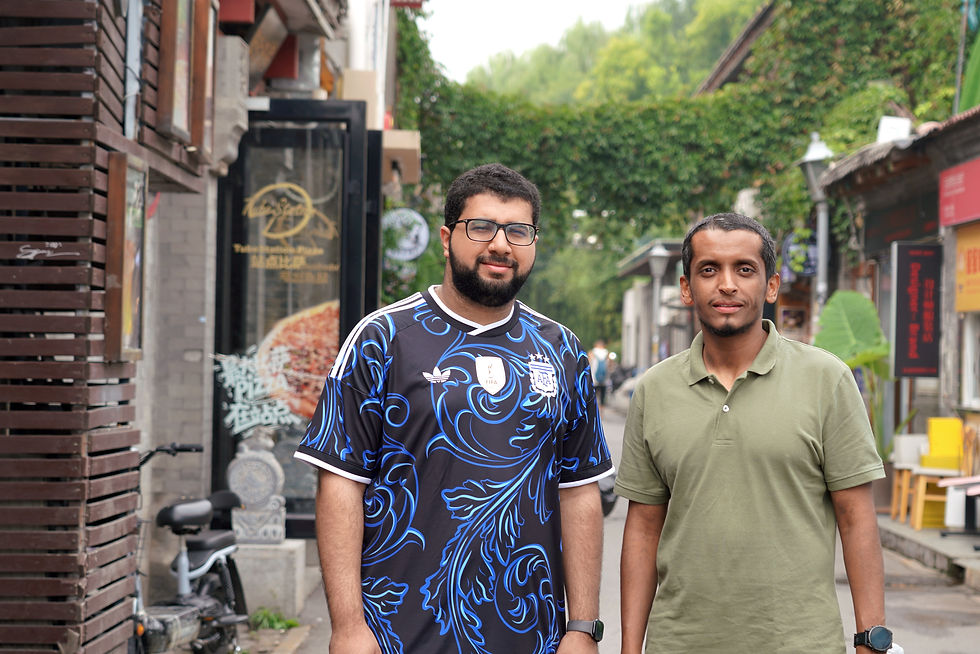

I am a PhD candidate, and I am in Beijing for the World Humanoid Robot Games. We represent Khalifa University in the United Arab Emirates. Our team is called KURA: Khalifa University Robotics Athletes. The name also means ‘ball’ in Arabic, which suits what we do.
We work with humanoid robots, particularly on positioning them correctly on a football field so they can cooperate and score against an opposing team. That teamwork is an important part of the project.
I do not think artificial intelligence will completely overtake human beings. There are still gaps, and systems reach points where they make errors. I am not convinced there will ever be a world in which robots do everything and people no longer need to work. Working closely with the technology makes me aware of its limitations as well as its possibilities.


Student
I am an undergraduate studying in the United Kingdom, and I only landed in Beijing yesterday. My immediate impression is that everyone here seems very busy and in a hurry. Life abroad can feel more relaxed; people greet each other and make small talk. Here, it sometimes feels as though people simply pass one another.
I think feeling like an outsider between cultures is normal. There are many people with similar experiences, particularly in places with large immigrant communities, such as the United States. Spending time with people who share something of your background can help. You are not the only person trying to find where you fit.
Mother — Auntie Wu
My advice to young people is to go out and see more of the world. Visit different places and meet different people. Give yourself the chance to understand lives beyond the one you already know.

My surname is Cao. I am twenty, and I am about to start university in Zhengzhou. I am from Hebei, so Beijing has always been close by. Of all the places I have visited, it is the one I know best. I loved it when I was little, although it feels very big and crowded.
I do not have a particular dream to describe right now. I came to look around after finishing my entrance exams. Today I visited the Yonghe Temple. Standing below the Buddha with incense in my hands was a striking experience. When I looked up into its eyes, it felt as though it was looking back at me. I saw people kneeling, even on the ground when there was no space on the cushions.
I am planning to visit the Temple of Earth next. My strongest practical impression of this trip may be the heat. I could actually feel the sweat running down me as I walked along the street. There is a lot to see here, but exploring Beijing in this weather takes some determination.


My surname is Li. I am thirty-two, and I run a shop selling Beijing-themed cultural products. I am originally from Henan, but I have lived in Beijing for many years. There are a lot of people here, and the traffic can be exhausting.
I still miss my hometown, but I have become a Beijinger now. My daughter is growing up as a Beijinger too. I hope that will be a good thing for her. It is not as simple as earning some money here and going home afterward. Once your family has put down roots, the life you came from is not something you can simply return to unchanged.
At this age, talking about happiness can feel like a luxury. Looking backward all the time does not help me much. I have to look ahead and try to make our daily life better. I do believe that has meaning. This is life for an ordinary person: carrying on and trying to take care of the days in front of you.


My name is Hasituya. I am Mongolian, forty-nine years old, and a primary-school teacher from Inner Mongolia. We are using the summer holiday to bring the children out and travel. My daughter will soon begin her third year at university.
We seem to have a particular attachment to Beijing. As soon as there is a holiday, it is the place we think of visiting. We came during the National Day holiday last year as well. We could not reserve tickets for the major museums, so we visited smaller ones: museums about coins, policing, and the courts. There is still so much to see.
My understanding of what matters has changed as I have grown older. When my parents were alive, being with them and bringing the whole family together felt most important. After they died, and after things at home had settled, my wishes became simpler. I want to be healthy, to feel happy in my daily life, to work seriously when I am working, and to relax and enjoy life when I am on holiday.
Losing my parents changed my sense of proportion. After experiencing that kind of separation, many of life's difficulties no longer seem so enormous. There are still setbacks, of course, but I feel that most things can be worked through. I am an ordinary teacher with quite ordinary wishes. These days, I value those wishes very much.


I paint and practise calligraphy here. My work is Chinese painting, and it was not something I had been doing continuously since childhood. It became part of my life later.
Making money from art can be difficult. Some artists earn well, but they are a relatively small group. For many people, painting is mainly an interest or a pleasure. I cannot give every young person the same answer about whether to make it a career. Some manage to earn a living from it, and some do not.
For me, it is something I enjoy, and I can earn a little from it too. That combination works for the life I have now.


I do not have a regular job now, and I did not have a formal salaried job before. I was in business, and I lost money. That period began around 2019. Since then, I have had to think about doing whatever work is within my ability, especially at my age.
What makes me happiest is harmony in the family. Right now, I feel that I am living for the older people and the children in my life more than for myself. The business losses have affected me deeply. My health is not especially good either, and I am not doing much work at the moment. I smoke to relieve some of the boredom and heaviness, even though I know there are problems with that.
I hope things may improve over the next two or three years. I cannot pretend everything is easy. For now, my family is what I keep coming back to, and I hope for a better situation ahead.


We are visiting Beijing from Henan. We are brother and sister, and we dressed up because we wanted to enjoy the experience of walking through the palace in these clothes. We saw other people doing it online and thought it would be fun. It is hot, but the experience is worth trying.
For me, happiness matters. Beijing has a lot of people and a great many historic places to see. The people we have spoken to have been welcoming, and it has been easy to chat with them. That has made the visit feel good.
Sibling — response on the future
I think people have to look for the meaning of life themselves. I have not found my answer yet. I am still thinking about the future; joining the military is one possibility.
This is our second day in Beijing, and we leave tomorrow. There is a lot to take in, even on a short trip. For now, I am still exploring, both the city and what I might want for my own life.


My surname is Xie. We have come from Wuhan and plan to spend about four days in Beijing. The Forbidden City is our first stop. We have enjoyed today, and the temperature feels quite comfortable compared with the heat we left behind in Wuhan.
This is my second visit to Beijing, but the first was a long time ago. We had been planning this trip for quite a while. The experience feels very different from the last time, and what we have seen so far has been good.
I am a fairly ordinary person. I do not have a dramatic life story or some extraordinary experience to describe. I do not feel a need to pursue a great, abstract meaning in life either. Eat well, live comfortably, and be happy. For me, those ordinary things are enough.


My name is Tongtong. We are eighteen, and we have come to Beijing to travel. I work as a nail artist. We dressed up because we wanted beautiful photographs and a chance to experience this kind of costume and styling in Beijing.
I think everyday life is interesting. I do not need one extraordinary story to prove that. There is enjoyment in coming somewhere new, trying something different, and sharing it with the people beside you. To me, life does have meaning.


Partner — relationship story
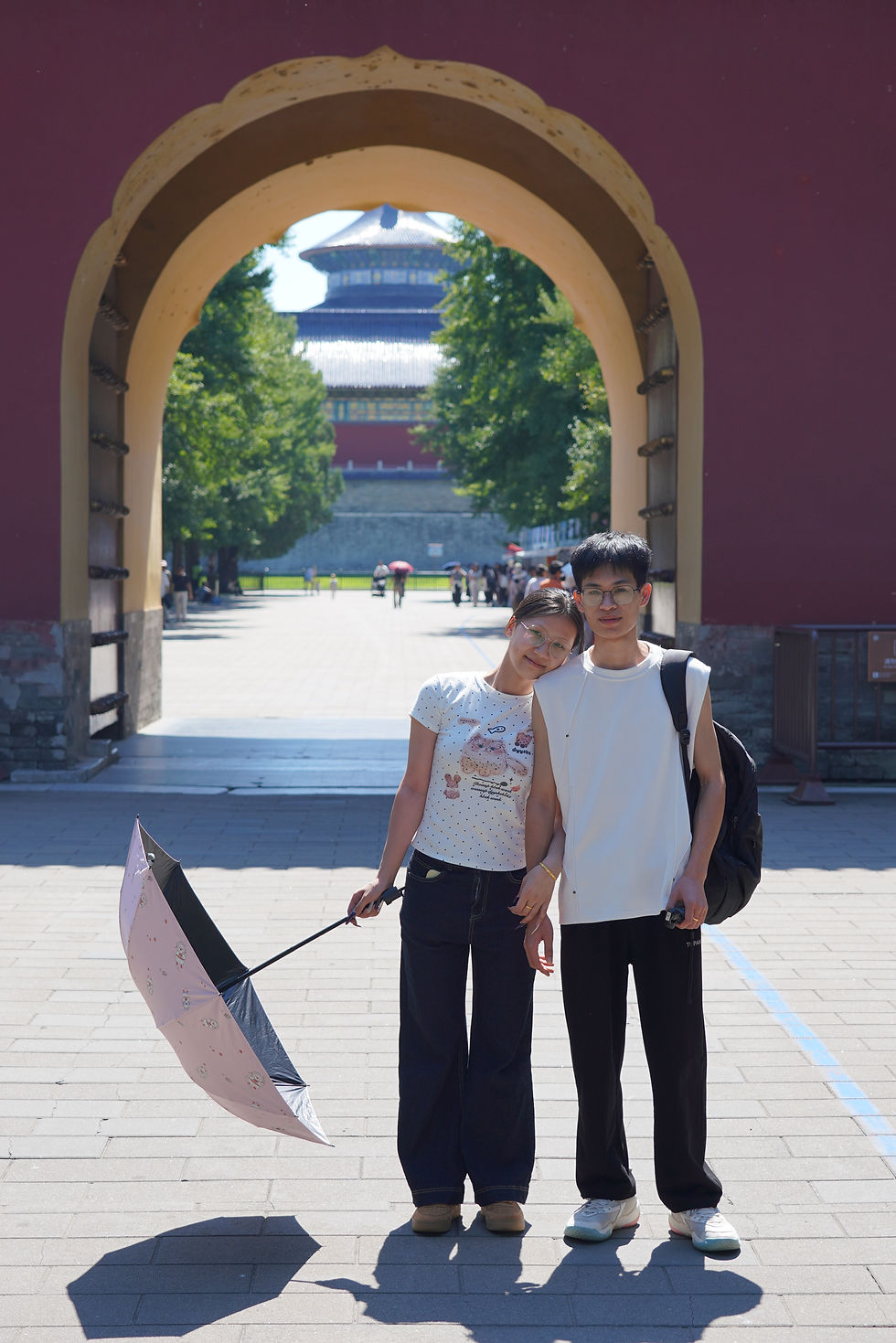
We are from Chaoshan and have come to Beijing on holiday with our families. We met through one of our local gong-and-drum celebrations. I was the more active one in getting to know my partner, who is quieter.
We have been together for nearly four years. Both sets of parents know about the relationship, and we are all travelling together now. We do think about getting married, but we are still young. There is time to grow a little older before taking that step.
I do not think marriage automatically makes love disappear. It depends on the people. Some change after marriage; others keep choosing the relationship. Understanding, trust, acceptance, and really knowing each other all matter.
Partner — on stability
Money matters too. A stable relationship needs trust and understanding, but it also has a practical side. Being able to support the life you want together is part of that.


I am seventy-five and have worked as a farmer. I have come to Beijing to travel and see its historic places.
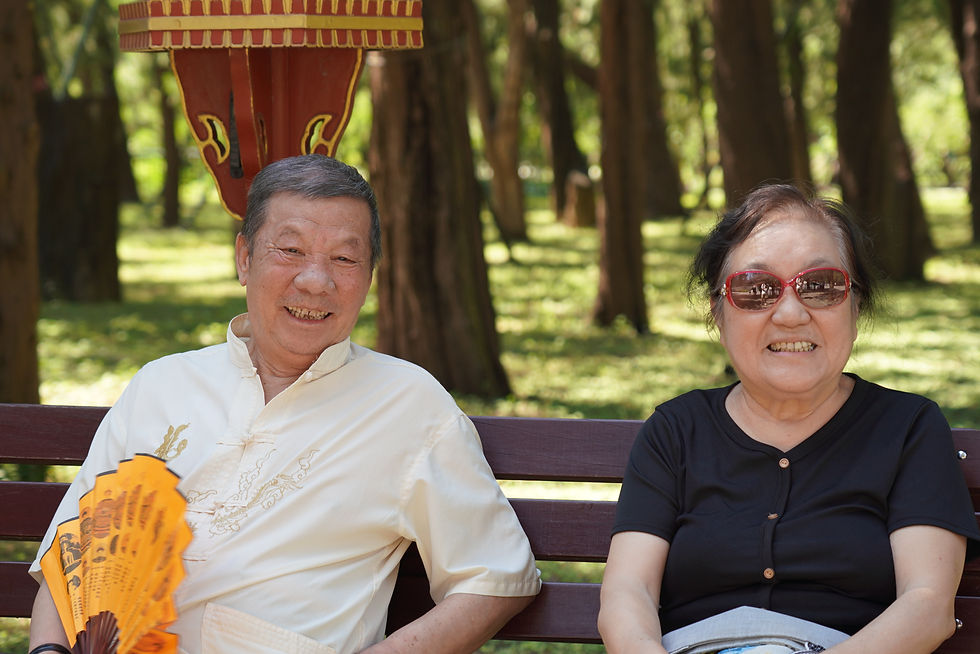


Respondent — on the marriage
We were introduced to each other. That was how many relationships began in our generation. An introduction did not mean meeting once and immediately getting married. The people introducing you usually knew something about both sides, and the couple still needed time to understand each other. It might take two or three years before a decision was made.
I do not think being introduced prevents love from lasting. Knowing the other person properly is what matters. We did not regard marriage as something to enter casually.
Respondent — on responsibility
I cannot simply say that young people's choices are wrong, but I do worry when relationships are treated too casually. Parents worry about their children too.
I do not think a partner has to be exceptionally wealthy. I would place more importance on honesty, loyalty, and responsibility. When something difficult happens, you need someone who will face it with you, not someone who runs away. To me, that is an important part of choosing a person to share your life with.


My surname is Li. I am fifty-three and work in the aquarium-fish trade. I have just come back from a delivery. In my experience, betta fish are not especially difficult to keep.


My surname is Guo. I am in my sixties, retired from service work, and I grew up here in Beijing. I am not dressed up; these are just the clothes I wear at home while cooking.
People sometimes envy a home in this area, but the reality is ordinary and not always comfortable. Our rooms can be cold in winter, hot in summer, and very damp. In hot weather, the air conditioner helps remove some of that moisture. Without it, the dampness is quite noticeable.
We were an ordinary working family. My parents worked, and my childhood was mostly school, playing afterward, running around, and growing up. It was not some unusually privileged life. The house belonged to the older generation. We lived with them and cared for them; after they died, we continued living here.
I do not ask a great deal from life. I want to eat properly, have somewhere to live, and stay reasonably healthy. Our retirement income supports an ordinary life. I would like to avoid becoming an unnecessary burden on the children. When the older people were alive, we looked after them. Later, as the children formed their own families, we helped them. That is how family life has moved along.
The public toilets are part of living here. They are much better than they used to be, and I am accustomed to them. Where there is space, some families install a small bathroom for the children, but people of my age may still prefer the facilities we know. It is a practical habit, not something especially mysterious.
There are things about the house I would improve, but I am content with much of my life. Having enough, looking after one another, and keeping healthy are what I value.


My surname is Tang. I am twenty-five, from Sichuan, and I study sociology in Macau. I applied to more than one place during the pandemic and accepted the offer I received from Macau. This is my first visit to Beijing. I have a friend working here, and I am also spending time exploring on my own. I have just had coffee and am planning to visit the Temple of Heaven.
For the future, I want to write and publish good academic work and see whether I can obtain a permanent university position. I know that studying the humanities or social sciences may not lead to a great deal of money. Still, I hope it can offer a reasonably comfortable life doing work that interests me. I would like to secure that foundation first, and then perhaps try other things. I do not think one person must follow only one path forever.
To me, the meaning of life is experience. I want to try different ways of living. There is no single fixed answer to life's choices, but choosing one road usually means leaving others behind. Where I can, I would like to explore the possibilities that remain open to me.
I enjoy travelling alone because I can follow my own rhythm. With friends, you naturally have to consider what everyone wants. On my own, I can leave when I like and decide what to do without negotiating it. There is no obligation to keep a conversation going when I would rather be quiet.
That freedom is valuable to me. Sometimes experiencing a place fully means giving yourself the space to move through it in your own way.
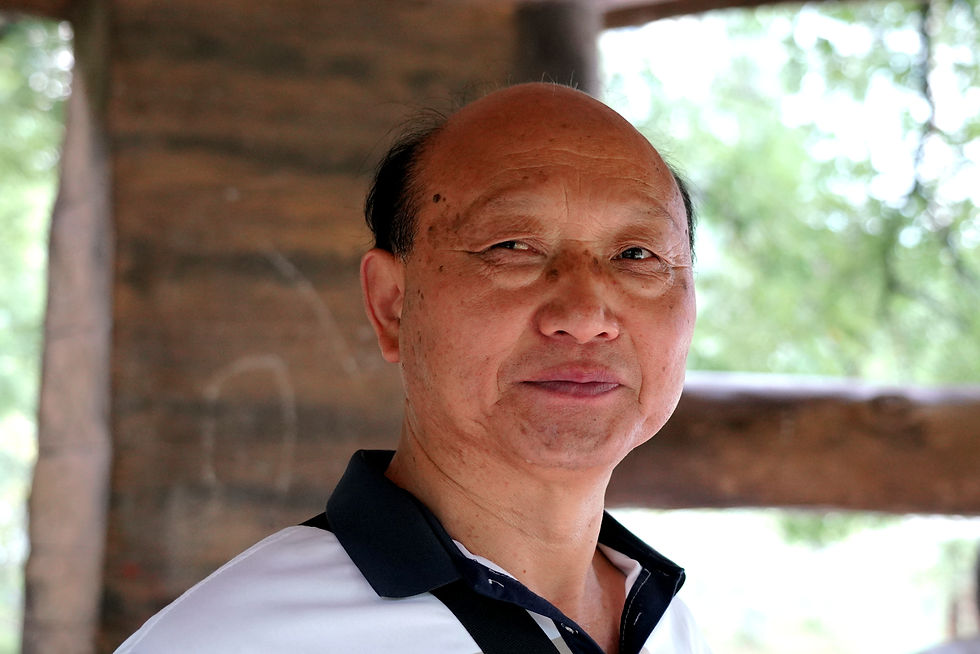
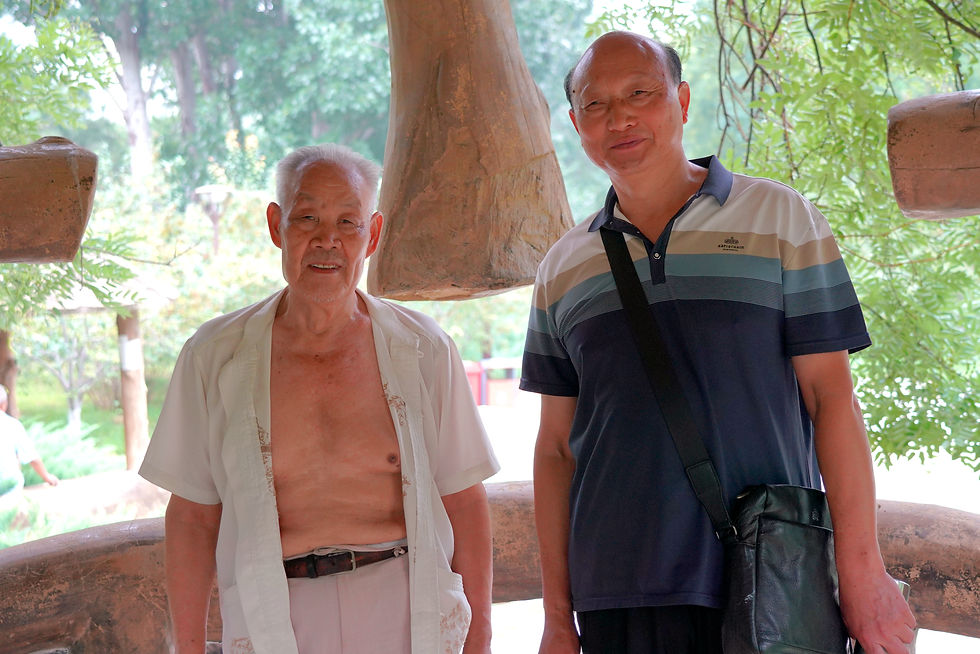

My surname is Wang. Time passes so quickly; before you know it, you have grown old. When I was young, during the collective era, having enough to eat and enough warm clothing was already a dream. We did not take those things for granted. Life has improved, and I think we should recognize that. Being able to live safely and in good health is something to value.
Still, ordinary people have worries. Some retired workers receive comfortable pensions, while people like us would be satisfied with a much smaller amount. Even that modest hope can be difficult to realize. Young people face their own pressures: work, marriage, housing, and the money a family is expected to provide. From what I see, high bride prices can place an enormous burden on rural families. Some young people lose confidence in marriage, and there are disputes that are difficult to make sense of.
I call myself a new Beijinger. I think this is a very good city, and I would like my family to be able to settle here. But homes are so expensive that we cannot afford one. It is a good place, yet making a home here is another matter. There is only so much a person can control.


My name is Zhu Wei, and I am retired. I came to Beijing because my daughter is here. I come to the park to exercise, and I enjoy the fact that this city has so many parks and places to walk. There is room in the day now to slow down a little.
My advice to young people is to do one thing well and keep at it. Over time, that steady effort can help you reach a stage when you can live with fewer worries. Contributing to your family is also a way of contributing to the wider world.
I do not think life needs a grand explanation. Being alive is already a good thing. I cannot give you some great theory about its meaning. I would simply say: live your life well. For me, that is enough.


I am eighty-three, an old Beijinger. There are four generations in our family now, and I am a great-grandmother. I used to live near Hufangqiao, inside the Second Ring Road. I moved to this area in 1985. I have watched a great deal of life go by.
These days, I try to keep an even temper. I do not look for trouble or interfere too much. I would rather take care of myself as long as I can. My children have their own responsibilities. They are good to me, and they are filial, but that does not mean I need to have an opinion about everything they do. Sometimes saying a little less makes life easier for everyone.
I do not believe being from Beijing makes a person better than someone from somewhere else. We are all people. Why look down on another person because of where they come from? Getting older does not give you a reason to act superior, either.
At my age, I think about keeping my body and my mind in balance. There is no use in scheming or competing over every little thing. Each day I wake up is another day gained. I can eat, sleep, and enjoy what is in front of me. That is a reason to be glad.


My name is Liang Li. I am sixty and retired. I used to work at Tiananmen. For the past six years, I have been feeding the stray cats here. I started because they looked so pitiful and no one was taking care of them. In this part of the park alone, there are more than thirty. I built shelters and arranged for cats to be neutered.
I am the one who brings their food along this stretch. I cannot simply take them all home; my son is severely allergic to cats. So I come here, carrying what they need. They learn to recognize me, and they wait for their meals.
What worries me about people finding out where I feed them is that someone may decide to abandon another cat here. Please do not abandon cats. A park is a particularly hard place for them. It may look green and open, but there are illnesses, insects, and very few people willing to carry heavy supplies in every day. It is much harsher than people imagine.
I wear old clothes and cover myself up when I come here. This work is not especially pretty or easy. I keep doing it because I see the animals that need to eat, and I know someone has to care for them.


I am thirty-nine, and I work in the repair and restoration of historic buildings. My background is in construction. I used to work on new buildings, but as that work became less available in Beijing, I moved into historic-building restoration. I have been doing this work for about two or three years.
One lesson I have learned is to establish yourself before taking on the responsibilities of marriage and family. Develop yourself first. Build your ability and become stronger, then think about the next stage of life. That is my own view, based on experience.
I find this work interesting. Restoring an old building is a way of leaving something for future generations. I am contributing what I can, and that gives the work a value beyond the task in front of me.


I am in my forties, and I deliver food. I came to Beijing from somewhere else. I do not have much to say about the city, or a clear answer about the meaning of life.
When you ask whether I am happy, I find that difficult to answer. For people at the bottom, life does not feel very happy. I cannot tell you when that will change. I do not have a particular dream to describe either. That is honestly where I am right now.


My surname is Yang. I am sixty-eight, born in 1958, the Year of the Dog. I was born here and have stayed in this area all my life.
There are many things about a city that you and I cannot decide. I cannot simply announce that I want a place rebuilt and make it happen. At my age, being alive matters more than getting worked up about everything. Of course I wanted to earn more when I was young. Who does not want to do well? But only so many people become wealthy. You cannot spend your whole life tormenting yourself over what you do not have.
I feel much the same way about life and death. Wanting to live to a hundred does not guarantee that you will. Being afraid cannot prevent the end from coming. Even talented, capable people die younger than anyone expects. I believe some things are beyond us. What we can do is take reasonable care of ourselves in daily life. That is more useful than worrying about what we cannot control.


My name is Caroline. I am originally from Poland, but I live in Germany and work as a flight attendant. I am here for two days, discovering Beijing. This is my second visit. The first time, I saw the Great Wall and the Forbidden City. Now I want to explore other parts of the city.
I have also been to Shanghai. Beijing feels less modern to me, but I mean that in a positive way. Its history feels especially interesting, and that makes me want to keep exploring. I have only just started today, so there is still a great deal to discover.
The people I have encountered seem very nice. What I regret is that I cannot understand them. I would love to talk with people, but the language barrier is quite strong. Even so, my first impressions have been good, and I am glad to be here.


My surname is Wang. I am forty and from Beijing. To me, the city is crowded, lively, prosperous, and full of history.
I cannot think of a particularly dramatic event to tell you about. I have a fairly easygoing approach to life. So far, there have not been any extraordinary turning points that I would single out. Most days, I am happy and content.
Perhaps that is my answer about meaning: I do not need every day to be remarkable. Being able to live it happily is already something I appreciate.


I work as a civil servant in Qingdao, and I have come to Beijing to visit the Yonghe Temple. I would not say I have a grand philosophy of life. I think you should keep making an effort.
I went through quite a few setbacks when I was looking for work. I studied for several years and eventually took the civil-service examination. Before that, I had worked as a lawyer. Becoming a civil servant happened partly through circumstance, but I have found that it suits me, and life is quite good now. Sometimes you try different directions and find yourself on a path you did not expect.
When choosing a career, I think you should consider your interests. Do something you enjoy and are good at; that gives you a better chance of staying with it. If money is your only reason for choosing a profession, you may still find yourself unhappy. As for me, I would say I am doing all right.


I am a university student visiting Beijing. I have looked forward to coming here since I was little. We have been to Tiananmen and are exploring more of the city today.
I am also interested in working on the internet. I make content on Douyin and have more than ten thousand followers. I am still learning about that world and what I might do in it. At the moment, I want to develop travel content, especially videos that show scenery. I am looking around, learning, and trying to understand what the possibilities might be.

I am fifty-nine, and I have been driving a taxi for sixteen years. Looking back, I think the best period of my life was around forty. I was more mature and steady by then. I had a family, and I understood things that had been less clear when I was younger.
Keeping birds is a personal interest of mine. I started with pigeons when I was a teenager. Later, after moving into an apartment, keeping pigeons was no longer convenient, so my interests changed. At first, I was drawn to birdcages themselves. I enjoyed collecting and looking at the cages, and eventually the cages led me to keeping birds. One thing grew into another, little by little.
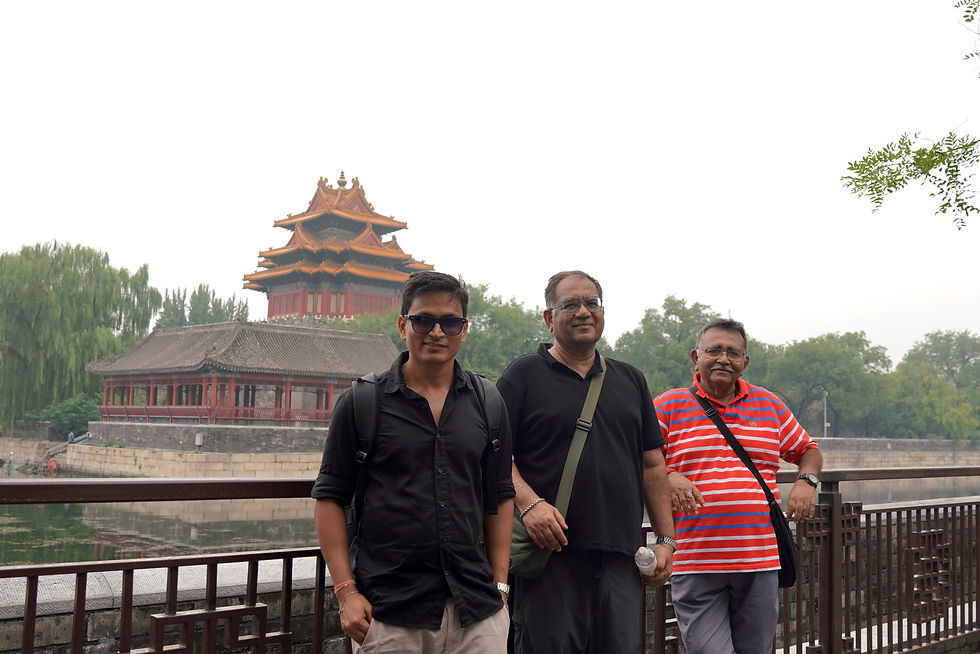

My name is Soumitra. I am sixty-five, retired, and from India. I used to work for the government. This is our second day here, and we have enjoyed what we have seen. China feels very developed, and the infrastructure is impressive. I can understand why people want to visit.
I think everyone has a different idea about the purpose of being alive. For me, I would like to pass my life without too much tension. I can be happy with little things. That is a simple answer, but it is an honest one.


People call me Xiao Jiujiu. I am a freelance makeup artist, and I am visiting here as a tourist. I feel a little nervous introducing myself like this, but my work is something I am happy to talk about.
I chose makeup because I enjoy it. After having a child, freelancing also gave me more flexibility to look after my family. A conventional job would not offer the same freedom.
The part I love most is helping girls feel beautiful. I really enjoy making that transformation happen for someone. It is a simple thing to say, but it is the part of the work that brings me the most pleasure.


I am self-employed, in my late fifties, and originally from Shanxi. I have lived in Beijing for nearly forty years. When I was young, the capital was a place I aspired to come to. I wanted to see more and broaden my experience.
Now I think peace and good health are the greatest sources of happiness. However much money you have, it means little if your health or your life is in turmoil. Having enough to eat and drink is enough for me.
I do not feel especially frightened by life and death at this age. Birth, ageing, illness, and death are part of nature. Even people far more accomplished than I am cannot escape that. I think an ordinary person can learn to face it calmly.
To me, living has meaning when we help create a better atmosphere around us and contribute something to other people. Everyone on this earth has to make a living. There is no need to rank people as higher or lower because of their profession. Whatever our work, we can try to face tomorrow in a good spirit.
When I was younger, I did not see everything so clearly. Now I realize how many things are not worth fighting over. I would rather pass on decent values and help leave a good environment for the next generation. That feels more worthwhile than winning every argument.


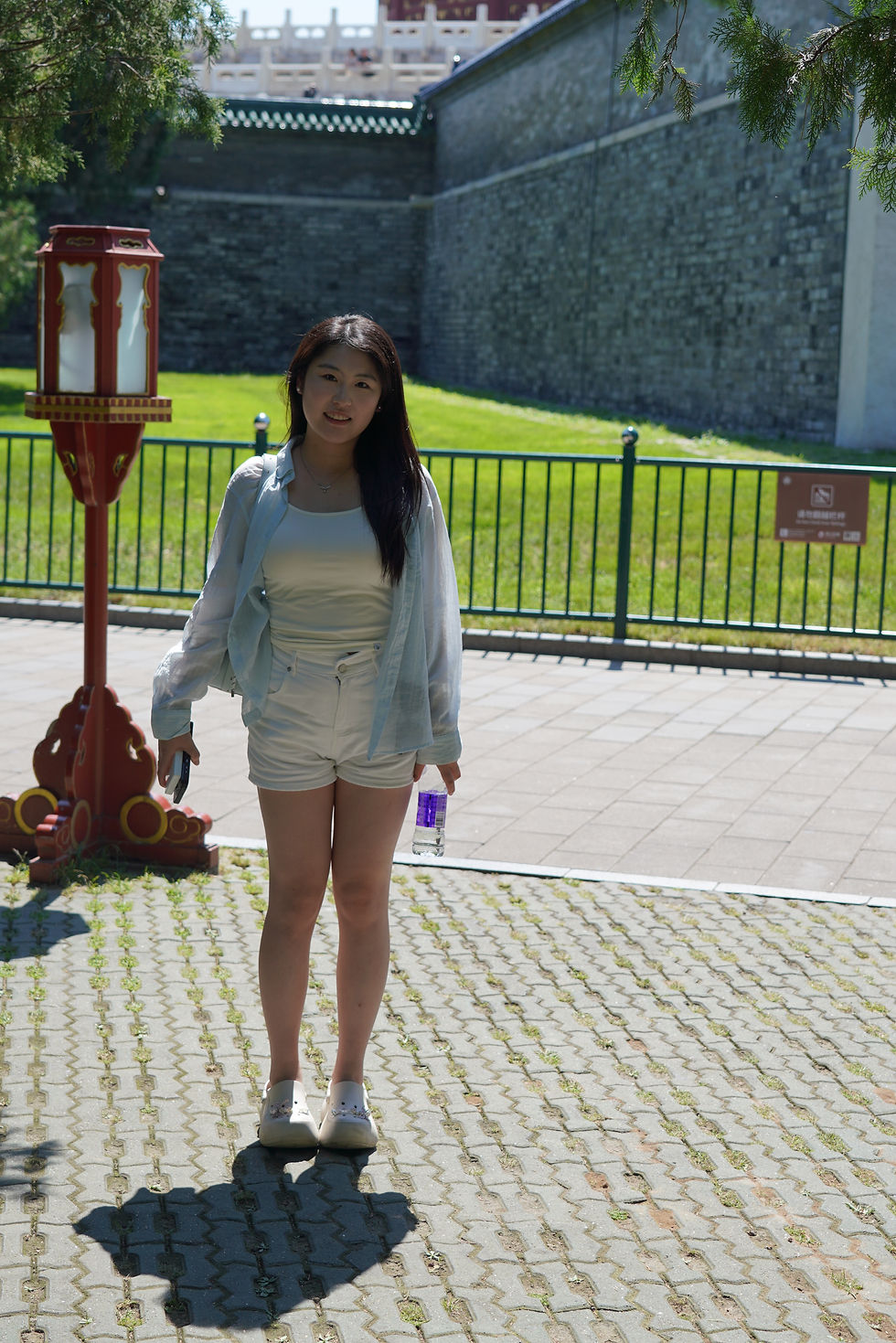
My surname is Liu. I am twenty-three, from Xuzhou in Jiangsu, and I am visiting the Temple of Heaven with my boyfriend. We have known each other for a very long time. We were classmates, and from primary school through university we have been at the same schools. That shared history is how our relationship began.
If we build a home together in the future, I think both people's wishes should be respected. We can discuss what each of us likes and work toward something that suits us both. A home should not be designed around only one person's voice.
Falling marriage or birth rates do not decide my own choices. Other people have their reasons, and we should not interfere with them. At the same time, each of us needs to think clearly about what we want and remain true to that. I want to make decisions because I understand my own wishes.
I am cautious about the conflict between men and women that appears so often in short videos. The content we receive is shaped by what we watch and what seems to appeal to us. We can end up inside a small circle of information that keeps confirming our own side. Some creators turn that conflict into attention and traffic; they are not necessarily trying to help us understand a real situation.
I think we need to step outside that circle. Look at your actual circumstances, the people in your life, and the information beyond your feed. Think rationally instead of letting a stream of videos decide how you see the world.
I take a similar approach to people's appearance. Some men enjoy a more carefully styled look; celebrities also face the demands of being on camera. Other people prefer a simpler style. I feel neutral about it. I do not have the right to take away another person's preferences or sense of beauty.


My surname is Zhu. I am forty-seven, and I have worked here for four or five years. Before this, I did other kinds of work, including food service. I drink douzhi myself and enjoy it. Its sour taste appeals to me, although I understand that different people like different things.
My greatest happiness is my child. I also enjoy coming to work. The women I work with spend the day doing our tasks and chatting together. There is pleasure in that company.
I would describe myself as someone with very few worries. I do not have a great secret for staying cheerful. There simply is not much around me that weighs heavily on my mind or demands constant concern.
I go to work, come home, and have good food to eat. I have a little money in my pocket, and if I see something I like when I go shopping, I can buy it. I have lived in this area for more than ten years, and I like it here. That ordinary, comfortable life is a very real happiness to me.


My surname is Guo, and I am sixty. I think young people should begin considering their direction while they are still in secondary school. If you wait until university to discover what you want to study, it can feel rather late. Having a goal helps you work toward it.
Guidance from parents and people with experience can make a difference. In my case, much of that understanding came through finding my own way. Listen to people who know the world of work. Meeting someone willing to guide you can save years of stumbling.
That is one reason I would encourage young people to get out of the house, speak with others, and communicate. Sometimes you meet someone whose interests or outlook fit yours, and a helpful relationship develops. You cannot know every useful connection in advance.
I am here visiting my mother. Life in a hutong feels more informal and sociable to me than life in an apartment block. In the lanes, people talk. In a block of flats, you can go out without seeing anyone you know, and the human connection can become thinner.
This home has been in the family for many years. It is part of that older way of living, with all its everyday familiarity.


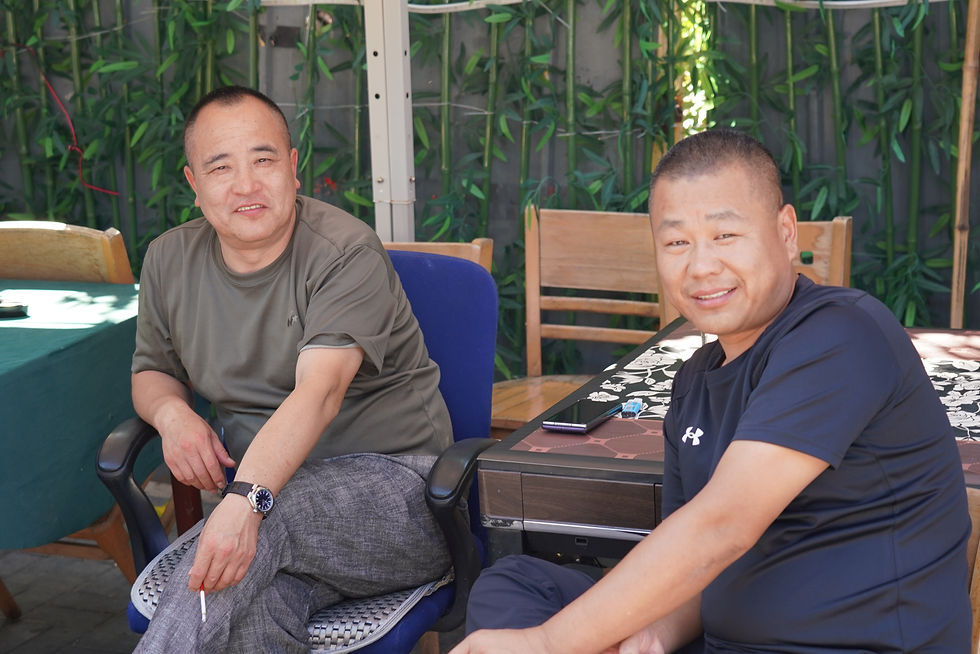
I am in my fifties and run a noodle shop. The property belongs to the family. My child had grown up and graduated, and I wanted something to do rather than sit around. The shop keeps me active. I do not claim to have a special business secret. Work steadily and do the job properly—that is my approach.
At first, I might tell you that my life has been fairly smooth. But there is one experience from 1989 that still matters to me. I was young and at school then. Some classmates and I borrowed a flatbed tricycle, made mung-bean soup in large aluminium pots, and took it to support the students.
From where I stood, we were helping people. There was support in schools and among others around us; we were not acting with an intention to overthrow anything. We were young, and we joined in with other students. I still object to the idea that this made us rioters.
Years later, that experience affected my child. I say that my child did not pass the political background review for military service because of it. My child was upset for days. I felt deeply wronged that something I had done so long before could reach into the next generation's life that way.
Do I regret taking food to those students? No. I thought it was a meaningful thing to do, and I still do. I can acknowledge that young people at the time had not thought through every political question. But the act I remember was bringing something to people who needed it. I do not see that as a shameful thing.
I have carried on with my life and my work. That does not mean I have forgotten this part of it. It remains one of the experiences through which I understand fairness, consequences, and the choices I made when I was young.


My surname is Tian. I am eighty-two. Around the time of SARS in 2003, I began working on ventilation-related ideas. I have worked on patents, including designs connected with ventilation and masks. One of those ideas led to a television appearance. I still remember how cold the studio felt: other people seemed comfortable in light clothing, while I was cold even in two layers.
What matters more to me is seeing an idea used. I say that the ventilation design has now been installed in more than three thousand places in Beijing. I did not come to this through a university degree. I worked at a practical problem and kept trying to solve it. That is something I would like younger people to understand: effort and curiosity can lead to something useful.
I carry drawings and photographs with me because I want people to see how the designs work. With the science-education activities taking place this month, I would like to share a drawing that people can use themselves. Science should reach ordinary people. If all I do is try to sell something, I feel that the point has been lost. When someone uses what I have made, I feel happy.
I think charitable work should be practical. It is easy to talk about doing good. I would rather leave someone with a design, a solution, or something they can actually put to use. I have allowed people to use my patent without charging a fee. At eighty-two, what would be the point of holding on to everything merely to collect more money? I could earn it today and be gone tomorrow.
I feel the same way about a tree I planted around twenty years ago. It has grown large now and has its own place in the records. One day, my own household registration will be cancelled, but the tree will remain. Someone may sit in its shade and remember that an old man planted it. That is a kind of leaving something behind that I can understand.
Getting older has also made me look hard at the history I lived through. I remember very low wages and years when they did not increase. I remember hunger around 1960. I do not accept an easy explanation that nothing could have been done. I still ask why food was not obtained for people and why other choices were not made. Looking back, I sometimes feel that people were left hungry to keep them subdued. That is my own painful interpretation of those years, and I have not stopped questioning it.
I have a very negative view of the Cultural Revolution. I think of the years of disruption, of people pulled away from productive work, and of the suffering that followed. I have looked for discussion of it in books about governing the country, including passages that quote Deng Xiaoping. I pay attention to who said what and how those judgments are recorded.
I also think about Peng Dehuai: a man called upon to fight, then treated as a political target afterward. To me, that is deeply wrong. I cannot understand asking people to serve and then turning them into enemies. Those questions are not abstract when you have lived through the period and kept the newspapers.
I do not think any leader's whole life can be reduced to a single word. There can be achievements as well as failures. But acknowledging achievements does not make grave later mistakes disappear. The consequences of those mistakes mattered to ordinary people.
When I hear the phrase ‘a springtime for science,’ I think of Deng Xiaoping. I associate him with reform and opening up, and with changes that continued to shape the country afterward. I keep reading and comparing these accounts because I want to understand how we reached the present.
For all those arguments about history, my own wish is practical. I want people to be able to use what I have made. I want the good I do to be something real. A working design, a useful idea, a tree that keeps growing—those are things I would be glad to leave behind.
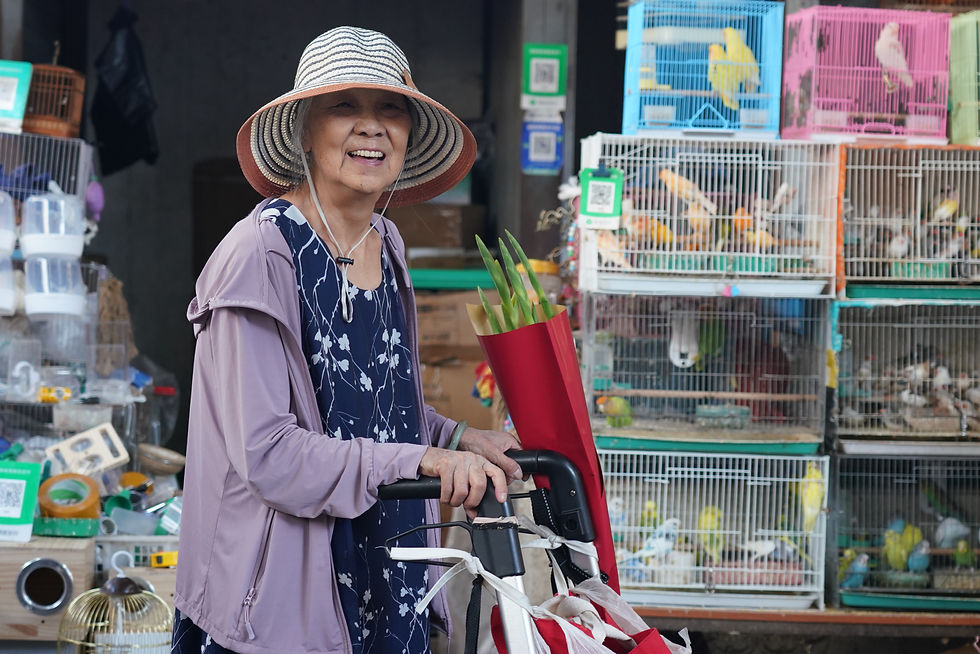


My surname is Hou. I used to work at a research institute. I have kept small parrots for well over ten years, nearly twenty. Friends gave me birds to begin with, and eventually I had more than twenty. Later, I gave some to other people.
I let them fly around indoors. If they make a mess, I clean it up. They can be noisy in the morning, but I do not mind; I like them. I have kept little lovebirds like these, and I enjoy having them around me.
I put food outside too, and it attracts many sparrows. I do not have a great piece of social wisdom to offer. Caring for birds is simply something I love.
I am not looking for a larger bird that can learn to talk. That would take more energy and teaching than I want to take on. These small birds are enough for me. Looking after them is a pleasure I have chosen for my everyday life.


My surname is Sun. I am fifty-one and originally from the northeast. I have been living and working here for more than twenty years. I have always liked these little birds. There is enjoyment in caring for them and watching what they do.
Prices have fallen because more birds are being bred. When the supply increases, they naturally become cheaper. Even so, I think the work is all right. The pleasure of being around the birds matters to me. It is still work, but it is work I find interesting.
The young parrots that have been hand-fed are used to people. Some are more comfortable being handled than others. Not every bird is expensive; some of the smaller ones cost a little over two hundred yuan.
A bird also needs proper care after it goes home. Here, there are many birds together. With individual attention at home, you can look after one carefully and see it at its best. That everyday care is part of the enjoyment.